Tuesday, May 19, 2026,
8:00 AM
– Wednesday, May 20, 2026,
3:30 PM
French Lick Springs Resort 8670 West State Road 56 French Lick, IN 47432
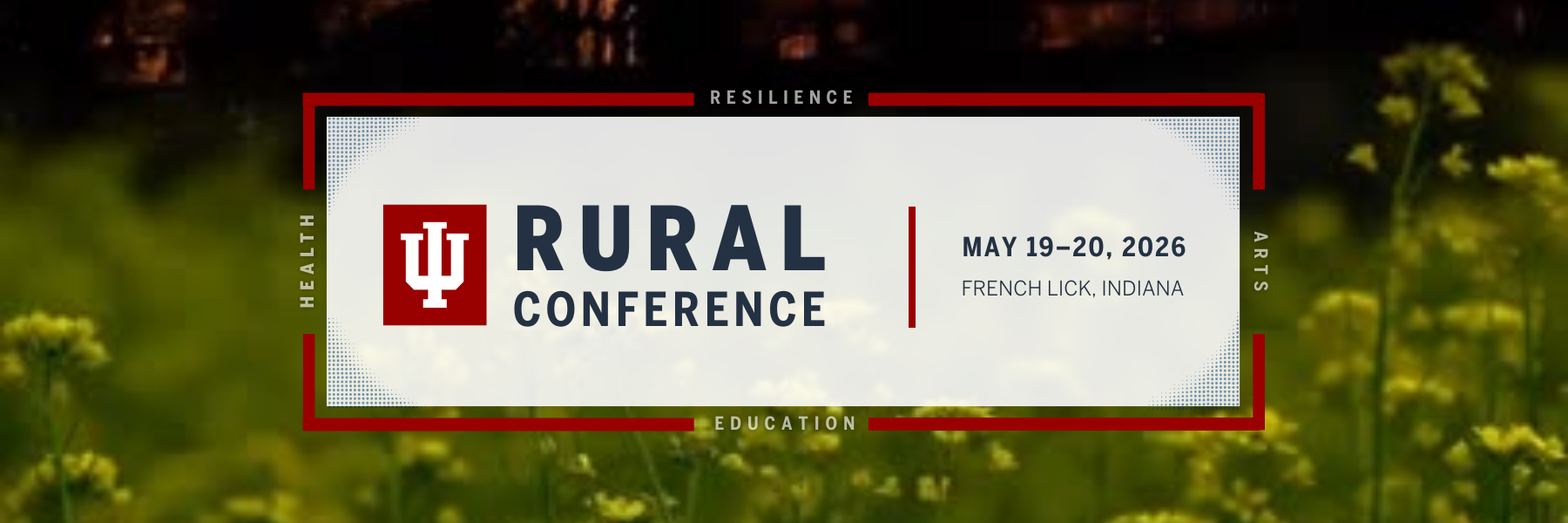
Join us for the IU Center for Rural Engagement's two-day conference, an event focused on celebrating and strengthening Indiana’s rural communities.
Connect with community and state leaders, residents, professionals, and Indiana University partners to share ideas, explore opportunities, and examine key issues shaping rural Indiana. Together, these conversations and collaborations spark new possibilities for building a more vibrant and resilient future across the state.
Registration includes all sessions and materials. Join us for both days or a single day. Doors open at 8 a.m.
The full conference rate is $120 per person. The rate to attend for only one day is $75 per person.
Registration for the 2026 IU Rural Conference has closed.
Feature topics
Taking Action for a Healthier Indiana
Breakout sessions will include rural mental health, local food systems and initiatives, substance use disorder interventions, and public health planning topics.
Collaborating for a Stronger Indiana
Breakout sessions will include arts and economic development, regional collaborations, environmental resilience, placemaking, and local arts topics.
Schedule
As an institution of higher education, Indiana University encourages and supports the exchange of ideas and academic freedom. Indiana University does not limit speakers or visitors to the university on the basis of their points of view or beliefs. An invitation to speak does not constitute the university’s or the internal sponsor’s endorsement of the speaker’s views or opinions.
Schedule details are subject to change.
Tuesday, May 19, 2026
Doors will open at 8 a.m. for check-in and breakfast.
Speakers: David Reingold, Elijah Howe
This morning session will bring participants together for opening remarks by IU Bloomington Chancellor David Reingold and a keynote address by Elijah Howe, executive director of the Community-Engaged Alliance and an associate faculty member at the Indiana University Lilly Family School of Philanthropy. Together, we will explore the power of community-engaged learning and the role of higher education in strengthening collaborative partnerships, expanding opportunity, and building local capacity.
Building a Family Resilience Program for Haitian Immigrant Families: A Collaborative Research Initiative in Daviess County, Indiana
Speakers: Soo Jung Jo, Pouagnel Elizaire, Nasreen Lalani, Haocen Wang, and Jennifer Stefancik
Haitian immigrants face compounding stressors from pre- and post-migration trauma, legal and economic precarity, and cultural and language barriers. These factors increase the risk of poor coping and emotional well-being for families. This study used a strength-based family resilience framework and community-engaged approach to co-develop a culturally tailored intervention promoting family recovery, coping, and wellness. Attendees will learn how community-academic collaboration supports culturally responsive, resilience-based mental health promotion, how training trusted local champions enhances ownership and sustainability, and how this model can be applied with underserved immigrant families.
This event has been approved for 1 CYC-P Applied Human Development CEU (Continuing Education Unit) by the Indiana University School of Social Work
This event has been approved for 1 Category 1 CECH (Continuing Education Contact Hours) for Certified Health Education Specialists by Prevention Insights, Indiana University Bloomington School of Public Health
Keeping Agriculture at the Center: Solar Grazing as a Tool for Rural Communities
Speakers: Dana Cummings and Paul Cummings
As utility-scale solar development expands across rural Indiana, communities are grappling with how to balance clean energy goals with agricultural heritage, land stewardship, and local values. This session explores solar grazing as a practical tool for keeping agriculture at the center of rural communities experiencing energy development. Drawing on real-world experience from Indiana solar sites, the presenters will share how grazing can support land management, strengthen rural livelihoods, and improve project outcomes when planned intentionally. Participants will gain practical insights into how solar grazing fits within broader community conversations about change, identity, and long-term rural resilience.
Fire Service Community Risk Reduction: More than Smoke Alarms and Stop, Drop, and Roll
Speaker: Stephen Coover
Family fire safety plays a significant role in protecting lives, preventing injuries, and minimizing property damage. Youth firesetting has serious consequences for families and communities and can signal deeper underlying problems if not addressed early. This program discusses youth-involved fires, signs associated with the misuse of fire, and key fire prevention topics that even the most fire-safe adults may be surprised to learn. Attendees will learn how a coordinated, community-based approach can increase awareness, support early intervention, and guide at-risk youth toward healthier decision-making that improves safety and long-term outcomes for individuals and communities.
This event has been approved for 1 CYC-P Development Practice Methods CEU (Continuing Education Unit) by the Indiana University School of Social Work
This event has been approved for 1 Category 1 CECH (Continuing Education Contact Hours) for Certified Health Education Specialists by Prevention Insights, Indiana University Bloomington School of Public Health
Integrating Prevention into All Stages of Recovery: Harm Reduction is Recovery
Speakers: Leah Edge-Reetz, Lavender Timmons, and Alyson Grider
Harm reduction has become an essential, evidence-informed approach within modern recovery spaces, yet it is still widely misunderstood. This presentation explores how harm reduction principles can strengthen recovery communities by meeting people where they are, reducing stigma, preventing overdose, and expanding pathways to wellness. Attendees will learn how harm reduction aligns with person-centered care, supports individuals at every stage of change, and fosters more inclusive, resilient recovery environments, giving them actionable tools to enhance connection, safety, and long-term recovery outcomes within their own communities.
This event has been approved for 1 CYC-P Development Practice Methods CEU (Continuing Education Unit) by the Indiana University School of Social Work
This event has been approved for 1 Category 1 CECH (Continuing Education Contact Hours) for Certified Health Education Specialists by Prevention Insights, Indiana University Bloomington School of Public Health
Voices and Votes: Democracy in America
Speakers: Joe Lannan and Martha Nice
Voices and Votes: Democracy in America is a traveling exhibition from the Smithsonian that will be on display at the Orange County Convention and Visitors Bureau from May 16 to June 28, 2026. See highlights from exhibit hosts and experts. Attendees wishing to attend this session will take a shuttle from the French Lick event center, where the IU Rural Conference is held, to the Orange County Convention and Visitors Bureau and back during the 10:15–11:15 a.m. breakout session.
Space is limited for this session. Shuttle vouchers will be offered on a first-come, first-served basis at the Center for Rural Engagement table.
Every Conversation Counts: The Rural Student Voices Driving Mental Health Change
Speakers: Abby Johnson, Bernice Pescosolido, Emma Daberko, and students
Lunch will be served beginning at 11:30 a.m., followed by a panel conversation at 12:00 p.m.
Bring Change to Mind’s message—“Every Conversation Counts”—shows how listening, sharing, and support chip away at stigma and strengthen mental health awareness. This panel features student leaders from rural high schools, highlighting how everyday conversations in small, tight-knit communities create connection, encourage help-seeking, and foster belonging. Panelists will share experiences leading BC2M clubs, reflecting on challenges like limited resources and heightened visibility, and successes in peer support and awareness. Through discussion and interactive strategies, participants will learn practical ways to initiate empathetic, stigma-reducing conversations that can transform school culture and empower students in rural and resource-limited settings.
Convening for Impact: How Cross-Sector Coalitions Can Drive Rural Food Security and Community Health
Speaker: Courtney Burkey, Jenn Eber, Allison Keen, and Chase Cobb
Small rural communities are often described as resource-limited, yet many possess untapped assets, relationships, and local capacity. Grounded in asset-based community development, this interactive workshop explores how intentional cross-sector coalitions can surface and mobilize resources that communities may not realize they have. Using the Jay County Food Access and Security Task Force as a case example, participants will engage in guided exercises to map community assets, strengthen partnerships, clarify roles, and coordinate action. Attendees will leave with practical tools to transform perceived scarcity into collaboration, resilience, and sustainable impact across rural health initiatives.
This event has been approved for 1 CYC-P Development Practice Methods CEU (Continuing Education Unit) by the Indiana University School of Social Work
This event has been approved for 1 Category 1 CECH (Continuing Education Contact Hours) for Certified Health Education Specialists by Prevention Insights, Indiana University Bloomington School of Public Health
Closing the Gap After Discharge: How Greene County Reduced Readmissions and 911 Calls Through Mobile Integrated Health
Speaker: Jennifer Knight
Rural communities often face high hospital readmissions, inappropriate 911 use, and limited post-discharge follow-up, particularly among older adults with chronic conditions. Greene County, Indiana—the fourth largest county in the state by land area, with a sparse population density—addressed these challenges by implementing a Mobile Integrated Health (MIH) program utilizing community paramedicine. This presentation highlights the program’s development and outcomes, including reduced 30-day hospital readmissions and non-emergent 911 calls. Core services include proactive home visits, medication reconciliation, care coordination, and telehealth integration, with practical lessons for delivering MIH in geographically large rural communities.
This event has been approved for 1 CYC-P Development Practice Methods CEU (Continuing Education Unit) by the Indiana University School of Social Work
This event has been approved for 1 Category 1 CECH (Continuing Education Contact Hours) for Certified Health Education Specialists by Prevention Insights, Indiana University Bloomington School of Public Health
Unidos en Salud: Bringing Diabetes Preventive Testing to Rural Latino Communities in Indiana
Speakers: Luis A. Santiago, Rossina Sandoval, Ines Gonzalez Casanova, Karla Ivette Galaviz, and Mylan Gaston
Latino residents in rural Indiana face a disproportionate risk of type 2 diabetes while encountering significant barriers to preventive screening and ongoing care. This session describes the co-design process, clinical outcomes, and implementation outcomes of a culturally responsive mobile diabetes prevention unit developed in partnership with Latino community members in Dubois and Daviess counties.
This event has been approved for 1 CYC-P Development Practice Methods CEU (Continuing Education Unit) by the Indiana University School of Social Work
This event has been approved for 1 Category 1 CECH (Continuing Education Contact Hours) for Certified Health Education Specialists by Prevention Insights, Indiana University Bloomington School of Public Health
Strategic Doing: Doing More Together (Part I)
Speaker: Priscilla Barnes
Strategic Doing is a practical discipline for turning ideas into action — especially when challenges are complex, cross boundaries, and no one has all the answers. It helps groups move from conversation to coordinated action using simple rules, shared outcomes, and small steps. Join Strategic Doing Fellow and IU School of Public Health-Bloomington Associate Professor Priscilla Barnes for a Strategic Doing two-session workshop. Leave the session with principles of Strategic Doing and integrate them into your own projects.
Alliance of Indiana Rural Water: Strengthening Rural Water Systems through Workforce Development, Compliance Assistance, and Capacity Building
Speakers: Lorean Johnson and Amanda Trakas
This session will introduce the Alliance of Indiana Rural Water and highlight how the organization supports small and rural drinking water and wastewater systems across Indiana. Topics will include workforce development and apprenticeship pathways, on-site technical assistance, source water protection, and regulatory compliance support. The presentation will also cover Indiana House Enrolled Act 1459 (HEA 1459), outlining current resources available to utilities and boards and discussing practical strategies for meeting new asset management and board training requirements. Attendees will be invited to share perspectives on effective board and leadership training approaches.
This event has been approved for 1 Category 1 CECH (Continuing Education Contact Hours) for Certified Health Education Specialists by Prevention Insights, Indiana University Bloomington School of Public Health
The State of Play: Civic Learning in the Digital Age
Speakers: David Echeverria and Maliya Homer
This interactive presentation will explore the implementation of civic and cultural education through digital media and entertainment. We will examine how community organizations and higher education institutions in Indiana and the Midwest can bolster local workshops, increase access, and provide measurable data through coalitions and innovative programming opportunities. Presenters will share curriculum examples, relevant data, and emerging trends shaping how young people engage with education today. Attendees will leave with a clear understanding of the current "state of play" and the urgency of diversifying educational approaches to reach under-resourced and under-engaged young people.
This event has been approved for 1 Category 1 CECH (Continuing Education Contact Hours) for Certified Health Education Specialists by Prevention Insights, Indiana University Bloomington School of Public Health
Improving Senior Nutrition and Health Access in Rural Indiana
Speakers: Kathleen Barrett, Sarah Dillon, and Jennifer Corral
This presentation will highlight the Senior Electronic Farmers Market Nutrition Program (eFMNP) Pre-Order Produce Box program, in partnership with Region Roots, CoAction, congregate sites, and the Indiana Department of Health. The session will discuss how the program increased access to locally grown produce for seniors in rural Indiana. It will also share insights from the Produce for Better Health program, a partnership with IU Health, Food Bank of NWI, and Region Roots that brings community health resources to areas with limited access. Together, the presentation explores key outcomes, lessons learned, and replicable opportunities to expand nutrition benefit access across Indiana.
This event has been approved for 1 CYC-P Development Practice Methods CEU (Continuing Education Unit) by the Indiana University School of Social Work
This event has been approved for 1 Category 1 CECH (Continuing Education Contact Hours) for Certified Health Education Specialists by Prevention Insights, Indiana University Bloomington School of Public Health
Strategic Doing: Doing More Together (Part II)
Speaker: Priscilla Barnes
Strategic Doing is a practical discipline for turning ideas into action — especially when challenges are complex, cross boundaries, and no one has all the answers. It helps groups move from conversation to coordinated action using simple rules, shared outcomes, and small steps. Join Strategic Doing Fellow and IU School of Public Health-Bloomington Associate Professor Priscilla Barnes for a Strategic Doing two-session workshop. Leave the session with principles of Strategic Doing and integrate them into your own projects.
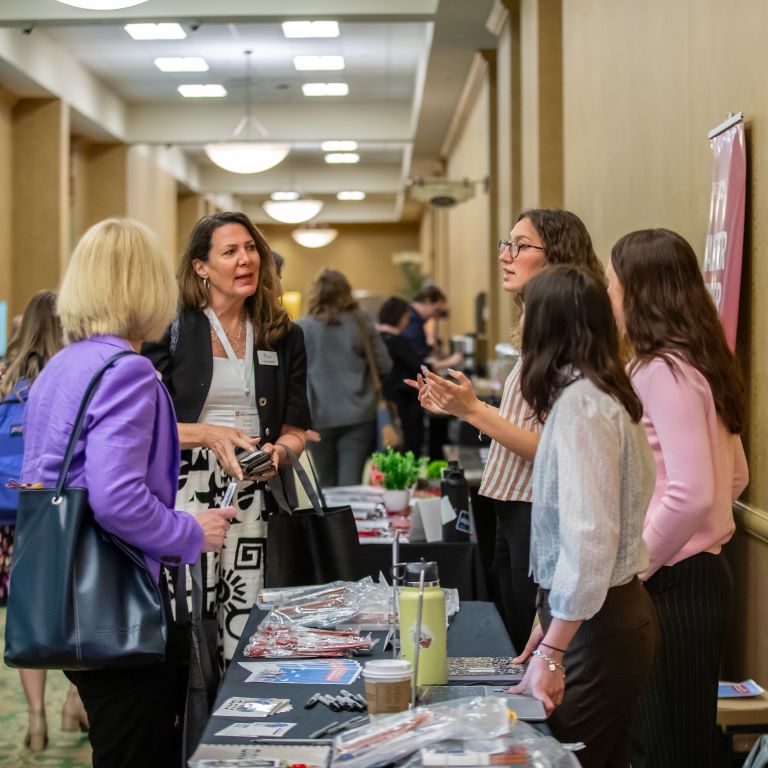
Learn about a wide range of rural initiatives, engage with poster presenters, and connect with fellow conference attendees. This session will also feature a special performance by Reimagining Opera for Kids (ROK), showcasing how the arts can inspire, educate, and strengthen rural communities. Join us for an energizing blend of learning, networking, and live performance that highlights the creativity and collaboration at the heart of rural innovation.
Posters:
2025-26 Indiana University Rural Scholars: Documenting and Improving the Lives of Those Living in Rural Communities Olivia Novak, Caley Monnier
Barriers to Help-Seeking following Violent Crime Victimization by Geographic Area Vanessa Parker, Rajanya Nandi, Tyler Jean
Effect of Social Determinants of Health on Outcomes in Shiga Toxin-Producing E. coli Infection and Hemolytic Uremic Syndrome Tanner Corse
Financing Frameworks in Rural Indiana: Helping Communities and Small Businesses With Funding Resources John Zody
Free Agent Fresk™: Mapping Identity, Status, and Agency in Rural Indiana Cristi Brant
Garden on Wheels: Empowering Youth Through Hands-On Local Food Systems Gowri Somasundaram
Grow'ing Rural Capacity Together: Practical Resources, Relevant Training, and Community Data Meghan Craven and Tyler Stock
Increasing Access to Mental Health Services Nicole Gaedtke
Lessons Learned from a Community Engagement Initiative: Community and Interprofessional Students' Perspectives of an Evidence-Based Mental Health Promotion and Substance Use Prevention Project in Southern Indiana Rural Public School Settings Kim Decker, Catherine Sherwood-Laughlin, Harman Kaur, Sai Paruchuri, Jodi Ichikawa
Recruiting Rural Caregivers into a Clinical Trial: A Comparison of Six Strategies Jordan Hill
Tele-Optometry in Rural Indiana Brad Sutton, Julie Torbit
Truth Comes Before Reconciliation: An Exercise in American Truth-Telling Hannah Fidler
What’s Going on with that Kid? Knowing and Celebrating Young Children’s Developmental Milestones Stephan Viehweg
Wednesday, May 20, 2026
Doors will open at 8 a.m. for check-in and breakfast.
The morning will begin with opening remarks from Kyla Cox Deckard, executive director of the Center for Rural Engagement, followed by a keynote address by Philip Barash and Lucas Cowan of Public Sphere Projects. Togetherness as Infrastructure: Why Rural Indiana Is Future-proof What if Indiana's small communities are a model for a more socially cohesive, responsive, and connected nation? In this keynote, cultural planners Philip Barash and Lucas Cowan propose a provocative theory: that the everyday fabric of rural Indiana — local clubs, volunteer organizations, and informal gathering places — is, in fact, a vanishingly rare and profound example of “social infrastructure.” Drawing on ideas from sociology research and shaped by first-hand experience of rural Indiana, the talk explores how local participation, mutual assistance, and the simple act of showing up for one another are foundations of a thriving community. Rather than looking backward with nostalgia, Barash and Cowan invite audiences to see these patterns of “togetherness” as pointing towards a shared future.
Creative Convergence: Arts-Based Tools for Rural Resilience and Identity
Speaker: Anne Johansson
This interactive workshop introduces Creative Convergence, a hands-on model that equips rural communities with arts-based tools to strengthen identity, navigate change, and foster resilience. Participants will engage in short, accessible activities—community identity snapshots, cross-sector dialogues, and vision-to-action planning—that highlight how arts and culture can catalyze dialogue, build pride of place, and connect residents across sectors. Drawing from Indiana’s statewide Creative Convergence initiative, the session will showcase real-world examples of communities leveraging arts partnerships to address local challenges, celebrate local people and places, and adapt to new contexts.
Activating Community Identity: Leveraging Higher Education for Rural Storytelling and Vision
Speaker: Andrea Kruszka
This interactive workshop presents a practical, partnership-based model where higher education institutions strategically deploy student talent and faculty expertise to empower rural community members and leaders. Participants will learn a scalable framework for moving from identifying core community values to creating tangible storytelling assets (branding, marketing materials, data reports). The goal is to strengthen cohesive community identity, support local decision-making, drive economic growth, and build sustainable, mutually beneficial collaborations between universities and the communities they serve.
Bridging the Gap: Readiness in Reentry and Recovery
Speakers: Beck Scott, Dr. Ricky Camplain, and Morgan Occhino
Bridging the Gap is a program that intervenes at the earliest stage of recovery, when emotional stabilization, identity rebuilding, and readiness for change begin. Grounded in cognitive-behavioral principles, the curriculum integrates peer support through structured activities that promote reflection, goal-setting, and real-world application. It prepares participants for recovery, employment, and behavior health engagement. This session offers a condensed experience of the program’s opening module and insights from its implementation in a rural county jail. Attendees will gain insight into how early-stage, peer-supported life-skills programming fills a critical gap for individuals who are just beginning to stabilize and consider next steps.
This event has been approved for 1 CYC-P Applied Human Development CEU (Continuing Education Unit) by the Indiana University School of Social Work
This event has been approved for 1 Category 1 CECH (Continuing Education Contact Hours) for Certified Health Education Specialists by Prevention Insights, Indiana University Bloomington School of Public Health
Rural Roots, Academic Boots: Rural Philanthropy, Practice, and Collaboration
Speakers: Ann Ruble and Leeann Wright
This panel offers evidence-based insights from academic research and actionable strategies to strengthen rural philanthropic ecosystems, build human capital, and foster collaborative approaches that respond to complex rural challenges. We investigate the need for formal philanthropic infrastructures in regions where traditional giving mechanisms are weak or absent, highlighting barriers to entry and the need for context-specific skills. We also offer a tailored credential and training model for fundraisers working in rural contexts. Additionally, we present a case study on substance misuse and recovery from a rural community foundation that exemplifies how coordinated, cross-sector efforts can amplify rural well-being. The session aims to inform discussion with participants on how the research can be applied to rural communities and the populations they serve.
This event has been approved for 1 CYC-P Development Practice Methods CEU (Continuing Education Unit) by the Indiana University School of Social Work
This event has been approved for 1 Category 1 CECH (Continuing Education Contact Hours) for Certified Health Education Specialists by Prevention Insights, Indiana University Bloomington School of Public Health
Lunch will be served beginning at 11:30 a.m., followed by a panel conversation at 12:00 p.m.
Enjoy a panel conversation that explores the different approaches Hoosiers are taking to create a more resilient future. From agriculture and business to community grassroots efforts to spiritual creation care, we will discuss the role of resilience in a variety of rural settings.
Speakers: Dave Fischer, Sister Kathleen Marie Cash, Mary Hess, and Annie Shattuck
Indiana Landmarks and the Value of Historic Preservation
Speaker: Alex Brooks
Indiana Landmarks has been preserving historic buildings in Indiana for more than 60 years and is the largest statewide preservation organization in the United States. While the organization works in urban and suburban communities, it also does significant work in rural Indiana, including helping revitalize French Lick. In this session, Community Preservation Specialist Alex Brooks will present on his work and the work of Indiana Landmarks, focusing on how historic preservation connects to rural communities and can support revitalization. Attendees will learn how historic preservation can help revitalize rural communities, from downtowns to homes and barns, while preserving history and supporting a sense of place and community.
Designing the Future: A K–12 Framework for Building AI-Ready Learners in Rural Schools
Speakers: Melissa McIntire and Corey Smith
As AI reshapes learning and work, rural schools must prepare students to understand, question, and create with emerging technologies. This session presents a grade-banded AI-Readiness Framework that develops students’ skills from early learning through high school. Emphasizing computational thinking, data literacy, creative problem-solving, and user-centered design, the framework outlines clear developmental progressions and practical classroom applications. Participants will explore strategies for integrating AI-focused learning across subjects and planning at the system level to strengthen instruction, build local capacity, and equip rural students for an AI-driven future.
Opioid Settlement Funds in Indiana: Sharing Best Practices for Local Grantmaking
Speakers: Rebecca Mueller, Nancy Eckerle, Kiersten Knies, and Brea Nunez
The City of Jasper is one of 648 Indiana local units of government set to receive national settlement funds from opioid manufacturers, distributors, and marketers through 2028. Our session highlights a spring 2026 collaboration between city employees, Indiana University experts, and student interns to: 1) study existing guidelines and best practices in settlement fund distribution in Indiana and nationally; 2) convene a committee to determine local needs, values, and grantmaking priorities; and 3) design and initiate a process to distribute and report on funds locally. We will share lessons learned and a roadmap for use by the three out of four Indiana recipient communities that, like Jasper, had not yet distributed any opioid settlement funds as of June 2025.
This event has been approved for 1 CYC-P Development Practice Methods CEU (Continuing Education Unit) by the Indiana University School of Social Work
This event has been approved for 1 Category 1 CECH (Continuing Education Contact Hours) for Certified Health Education Specialists by Prevention Insights, Indiana University Bloomington School of Public Health
Transforming Obstacles into Opportunities
Speaker: Denny Spinner
Transforming Obstacles into Opportunities is a reflective and practical guide on community leadership, focusing on how rural communities can turn challenges into catalysts for growth. Drawing from Denny Spinner’s extensive experience as mayor of Huntingburg, director of the Office of Community and Rural Affairs, and executive director of the Center for Rural Engagement at Indiana University, the session illustrates how obstacles can be reframed as opportunities through vision, collaboration, and persistent action.
Mingle, connect, and indulge your taste buds at a popcorn bar catered by local favorite Jasper Popcorn.
How Public Art Happens: Lessons from Orange County Murals
Speakers: Adam Long, Brandon Query, and Skylar Whiteman
This presentation explores how community-driven murals can transform small towns. Featuring artist Adam Long, community leader Brandon Query, and OCEDP's Skylar Whiteman, we share how two projects—the Magnificent Monon mural in Orleans and the Heart on the Wall mural in Paoli—came to life. We highlight contrasting approaches: a town-council-led grant process versus a grassroots funding campaign, and share lessons on securing funding, engaging the public, and using social media to turn curiosity into support. Attendees will leave inspired with practical strategies for creating public art that strengthens community identity and sparks lasting engagement.
Empowering Orange County: How Team OC Connects Youth, Seniors, and Community
Speaker: Priscilla Woodrum
Team OC is dedicated to strengthening Orange County through meaningful connections between generations. By engaging youth, seniors, and families in mentorship, food sustainability, and wellness programs, Team OC creates opportunities for learning, leadership, and community growth. From teen chef initiatives to senior-led garden projects, every effort builds bridges of understanding and purpose. Attendees will gain insight into how community-based collaboration can reduce barriers faced by marginalized and vulnerable populations across Indiana. Participants will learn strategies for engaging hard-to-reach communities, fostering intergenerational support, and building local partnerships that address food insecurity, isolation, and health disparities.
This event has been approved for 1 CYC-P Development Practice Methods CEU (Continuing Education Unit) by the Indiana University School of Social Work
This event has been approved for 1 Category 1 CECH (Continuing Education Contact Hours) for Certified Health Education Specialists by Prevention Insights, Indiana University Bloomington School of Public Health
Film Screening: Food, Insecure
Speaker: Shannon Cagle Dawson
Food, Insecure is the 2025 follow-up documentary to The Working Hungry, a film depicting the exacerbated rate of food insecurity among working Hoosiers, especially following the COVID-19 pandemic. Like The Working Hungry, this short, border-to-border documentary focuses on the barriers to overcoming hunger in Indiana, with particular attention to the rural poor. Food, Insecure includes expert commentary from a rural poverty expert at Ball State University and two doctors who serve rural populations, along with anecdotal interviews from individuals living and working in the rural poverty space. This documentary presents multiple levels of solutions to the barriers facing those impacted by food insecurity.
This event has been approved for 0.5 CYC-P Applied Human Development CEUs (Continuing Education Units) by the Indiana University School of Social Work
This event has been approved for 1 Category 1 CECH (Continuing Education Contact Hours) for Certified Health Education Specialists by Prevention Insights, Indiana University Bloomington School of Public Health
From STEM Labs to STEM “Ghost Towns”: What Rural Communities Need to Sustain Innovation
Speakers: Greg Strimel and Sascha Harrell
This presentation examines why some rural elementary STEM laboratories thrive while others become underutilized “STEM ghost towns.” Drawing on mixed-methods research using the Technology Acceptance Model, the session highlights how teacher perceptions, professional learning, leadership support, and community context influence sustained use of STEM spaces. Participants will explore practical strategies rural communities can use to move beyond one-time investments toward long-term impact. The presentation emphasizes educators' role as critical connectors among technology, instruction, and workforce awareness, offering actionable insights for educators, administrators, and regional leaders seeking to strengthen rural STEM ecosystems.
Accommodations
The room block for the IU Rural Conference has now closed. Please see Timeless French Lick for options for accommodations.
Things to do
French Lick has a wealth of activities and dining experiences. Check out theVisit French Lick websiteto see what's happening during your visit.
Exhibit booths for the 2026 IU Rural Conference are now fully reserved. Sponsorships are still available; however, contributions received after April 30, 2026 will not be included in printed materials.
Two premier exhibit booths (two 6’ tables skirted and covered; 4 chairs)
Community engagement spotlight opportunity during breakfast or lunch
Complimentary conference registration for 8 seats
Opportunity to add your branded promotional item to conference bags
Logo featured on conference welcome signage and e-program
Electronic slide featured during breakfasts and lunches
One exhibit booth (6’ table skirted and covered; 2 chairs)
Complimentary conference registration for 4 seats
Logo featured on welcome signage and e-program
Opportunity to add your branded promotional item to conference bags
Electronic slide featured during breakfasts and lunches
One exhibit booth (6’ table skirted and covered; 2 chairs)
Complimentary conference registration for 4 seats
Logo featured on e-program
Electronic slide featured during breakfasts and lunches
One exhibit booth (6’ table skirted and covered; 2 chairs)
Complimentary conference registration for 2 seats
Questions about sponsor opportunities? Contact us at iucre@iu.edu.